The spec before the image
Predictable image generation stems from approving a structured JSON contract before rendering begins.
You type a sentence describing a picture, and an image comes back that looks finished. When something about it is wrong, the flaw has no name. You cannot say which property to change, because no property was ever written down.
Controlling an image model takes an explicit contract. Every property of the picture goes into the spec, the planes of the composition, the light and the lens, and a person approves it before anything renders. The image-production agent in melchizedek works to that rule: it defines the concept in JSON first, and generates only once a person has approved it.
This print emerged directly from that workflow:
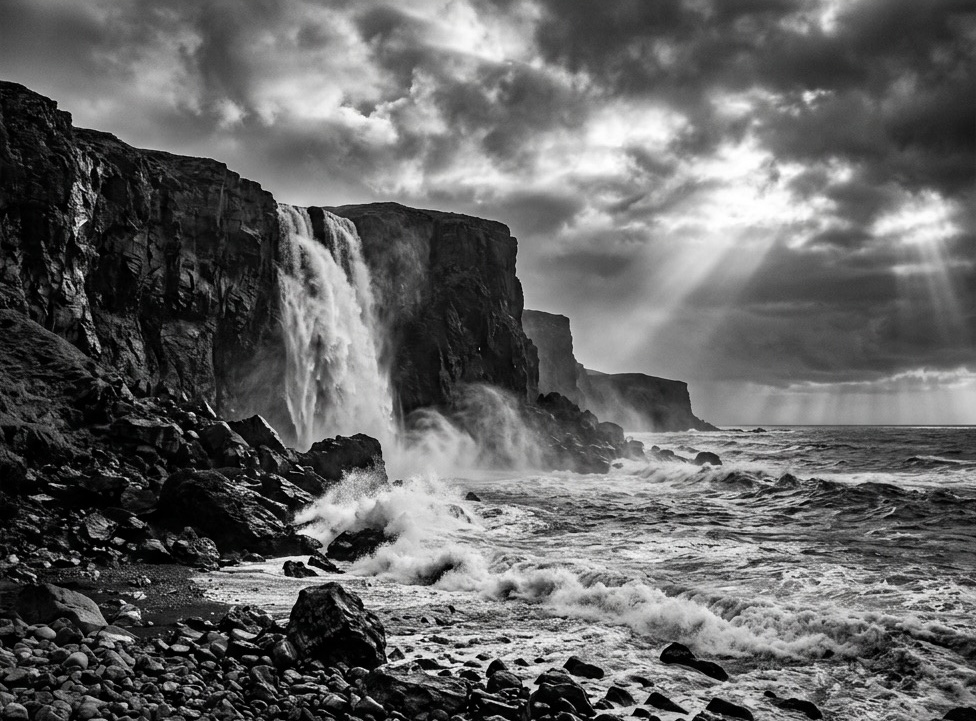
the spec is the point
Before the approval step, the agent builds the spec that pins down the composition, the light, and the medium. Here is the spec behind the print above, abbreviated:
{
  "meta": {
    "title": "Where the Land Ends",
    "genre": "fine-art landscape",
    "artist_style": "Ansel Adams — heroic monochrome"
  },
  "visual_elements": {
    "subject_matter": {
      "location": "volcanic basalt coastline",
      "primary_focus": "waterfall plunging from sea cliffs into storm surf",
      "foreground": "wet black boulders, surf exploding over them",
      "midground": "the falls and sheer cliff face",
      "background": "receding headlands, open sea"
    },
    "atmosphere": {
      "weather": "storm breaking",
      "mood": "sublime, elemental",
      "lighting": "crepuscular rays through torn cloud, upper right"
    }
  },
  "technical_specifications": {
    "medium": "gelatin silver print, presented on a gallery matte",
    "color_palette": "monochromatic",
    "tonal_range": "full Zone System — dense blacks to luminous spray",
    "camera_emulation": {
      "type": "8x10 large format",
      "aperture": "deep focus",
      "film_grain": "fine"
    }
  },
  "composition": {
    "framing": "wide-angle",
    "perspective": "low, from the shoreline",
    "balance": "cliff diagonal leading into the rays"
  },
  "generation_parameters": { "aspect_ratio": "3:2" },
  "generation_prompt_string": "…synthesized last, from everything above…"
}
Each field in the spec holds one visual variable still. Writing foreground, midground, and background separately gives every plane of the image a job instead of letting the subject flatten into one. “Crepuscular rays, upper right” turns the abstraction of “dramatic lighting” into a place on the canvas you can check the render against. The camera block sets depth of field and grain, which is what pushes the output toward reading as a photograph. The final prompt string is then compiled out of the approved fields, so the model receives exactly what the person authorized and nothing that arrived later.
Here is the conversation that produced this print. Watch the agent settle the spec before the render begins:
The gallery matte in this image exists because a human explicitly requested it during the review phase. The system updated a single property and re-presented the contract for sign-off. That is the entire discipline of controlled generation: an iteration is a precise update to a specification.
This principle extends across every domain we explore. Just as the market agent names the exact conditions of its own reversal, the visual agent says what it will build before it builds it. The contract does not make the model deterministic: run the same spec twice and the pixels differ. What it does is hold the intent still, so every difference between what you asked for and what came back is a difference you can name, and every change of mind is an edit to a document rather than a new sentence typed into a box.